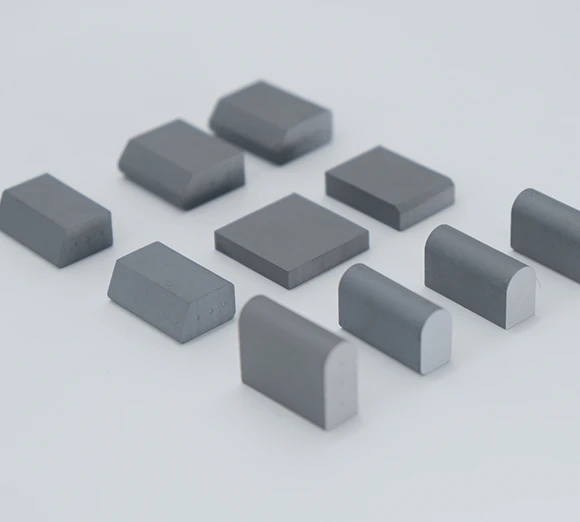
Preserve comparable before-and-after geometry records, the assembly configuration and the joining-batch history. Ask the process specialist to assess the difference without assuming its cause. A straight loose insert and a distorted finished assembly are different inspection states; their records must be interpretable before the sequence can support a conclusion.
Keep before-and-after dimensional records under comparable supports
Identify which inserts and steel components were measured before assembly and whether the later measurement refers to those same pieces. A sample from the same grade is not automatically a before-state measurement of the finished assembly. Keep specimen identity and production relationships visible so the reviewer can distinguish direct comparison from general background.
Record supports, orientation, datum, measurement stations and inspection stage for both sets of readings. Do not compare a loose insert on one support arrangement with a restrained assembly under another as though only the process changed. NIST's measurement guidance is relevant to the evidence quality, while the immediate task is to define the geometry actually measured.
The brazing-process background guide covers the larger manufacturing discussion. This enquiry should focus on the observed dimensional change and the records needed to investigate it, rather than using a finished shape as a retrospective temperature record.
Document the assembly geometry and joining batch history
Provide the controlled assembly drawing, component revisions, material identities and joining-batch reference. Ask the process owner which production records are relevant to the observed feature. Preserve records of subsequent finishing, handling or straightening as well, because “after brazing” may actually mean after several additional operations before final inspection.
Include photographs of the measurement arrangement and the finished assembly. Note whether the discrepancy is local or extends across the component, and where it sits relative to the joined features. Avoid changing the part to make the deviation more obvious. Any further preparation or destructive examination should be agreed with qualified personnel.
CERATIZIT's joining reference discusses differences in material behaviour and joint stresses as technical considerations. It provides a reason to investigate the whole joining system, not proof that a particular furnace cycle, fixture or material caused this assembly's condition. The specialist needs the actual records rather than a generic process explanation.
Ask the process specialist to investigate material mismatch and joint conditions without declaring a cause
Ask the reviewer to separate confirmed dimensional nonconformance from possible contributors. The first may be established against the approved drawing even when the second remains unresolved. Record what additional evidence would help distinguish the possibilities and which findings cannot be recovered from the retained part alone.
Do not prescribe heating, cooling, clamping or straightening changes as a buyer-level remedy. A proposed process revision should come through the responsible process and design authorities, with appropriate qualification and acceptance evidence. An adjustment that makes one sample look straight does not automatically demonstrate a repeatable compliant process.
When discussing further insert supply, clarify whether the loose inserts themselves met their requirements and what remains under assembly review. Keep component acceptance and finished-assembly acceptance separate. Close the case with the measured condition, approved disposition and any supported process finding, rather than a simplified statement that straight inserts prove the joining stage was solely responsible.
Sources and further reading. The ordered specification and applicable equipment documentation control acceptance and service decisions.
CERATIZIT Joining Techniques ↗NIST Metrological Traceability: FAQ and Policy ↗


