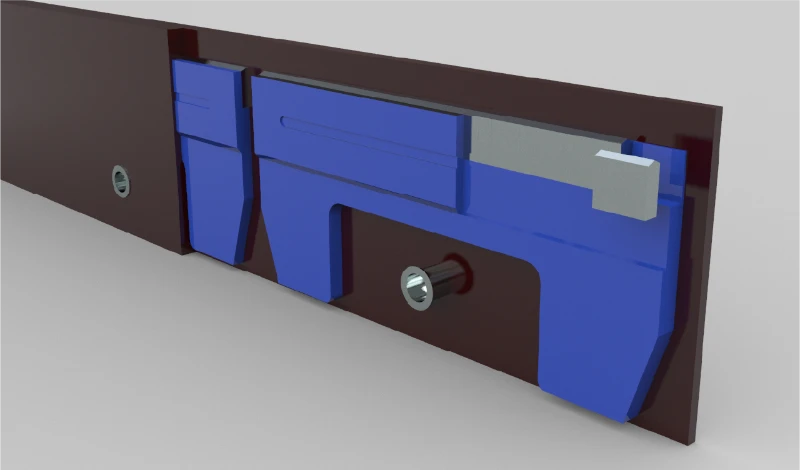
Hardness alone is not a complete segment specification. Define the required assembly and interfaces, identify the rubber property and test basis, and state how the finished system’s suitability will be reviewed before ordering.
Identify assembly geometry, retention and carbide as separate requirements
Start with the approved assembly drawing and the role of the requested segment. Identify the retained geometry, mounting interfaces, steel components and carbide features that the supplier must preserve. Decide whether the request is manufacture to an existing design or development of a proposed new design. Leaving that distinction unstated gives the supplier responsibility the buyer may not intend to delegate.
The rubber-flex bonding guide provides broader manufacturing context. This enquiry is about designing the purchase specification before an order, not deciding whether a delivered certificate is sufficient. List the requirements that cannot be inferred from a rubber number, including the part’s shape, orientation, retention arrangement and permitted companion components.
Request the rubber test method and applicable material specification
For the hardness requirement, ask the responsible material specialist to identify the property, test method and relevant specimen or product condition. Do not compare unexplained numbers or copy a range from an unrelated application. The specification should make clear what is being measured and how the requirement will be assessed, without inventing a compound formula or universal target.
Specify other necessary material and component requirements through the approved design process. Clear Roads’ carbide specification research addresses insert properties and inspection separately, illustrating that carbide requirements need their own definition. It does not supply a rubber specification or approve this assembled product. Keep each component’s requirement attached to the feature it actually governs.
Keep system performance verification separate from a single compound property
Define the proposed verification route before suppliers quote. Separate dimensional and material checks from an authorized assessment of the complete assembly’s intended function. Ask what evidence the supplier will provide and which design assumptions need buyer approval. A hardness result should not become the only acceptance question simply because it is easy to place in a purchase-order field.
For a rubber-flex segment enquiry, submit the controlled interfaces and required outcomes together. If the supplier proposes its own assembly, request a reviewable design package and identify the approval authority before release. The finished specification should let two suppliers respond to the same bounded requirement without being forced to guess everything beyond rubber hardness. That is the next step here; evaluating a particular delivered compound certificate belongs to a later acceptance decision.
Primary references support the specific points linked above; equipment documentation applies to its stated models.
Clear Roads 17-02: Standard Specifications for Plow Blades with Carbide Inserts ↗


