Describe the two surfaces and their transition as separate service conditions. Confirm the equipment’s approved use on each, and avoid choosing one universal shoe clearance or edge specification from the asphalt portion alone.
Describe the transition, loose aggregate and service requirements
Map where the surface changes and identify how much of the actual clearing task belongs to each section. Note loose aggregate, known surface irregularities and the road owner’s desired finish. Route length is useful context, but the buyer should also identify which section creates the difficult or unacceptable outcome. A short gravel stretch can still impose an important protection requirement.
The gravel-road shoe guide covers the broader unsealed-surface topic. This question is about a mixed route and its transition. State whether the same machine must serve both parts in one assignment and whether the operation permits an approved configuration change or separate equipment. Do not assume those options are available without checking dispatch and equipment constraints.
Check OEM surface-use guidance and route-specific limits
Use the relevant surface-use and setup documentation for the actual plow and accessories. Ask the equipment authority which configurations are permitted on the two surfaces and how the transition should be handled within its procedures. This discussion does not prescribe a common clearance, speed or pressure. A setting that appears suitable on one portion cannot be transferred by editorial rule to the other.
Define the two desired outcomes separately: the required paved-road service condition and acceptable aggregate retention on the unsealed section. Note any restrictions on disturbing the surface or moving material toward shoulders. Ask suppliers to explain the limits of their proposals against both requirements rather than promising that a single material is ideal everywhere.
Compare approved equipment options without prescribing one shoe clearance for both surfaces
Evaluate candidates with separate observations for asphalt, gravel and the transition. Keep edge condition and any surface disturbance tied to location so a combined route average does not conceal the weak section. If an option meets one requirement but not the other, report that trade-off explicitly and let the road and equipment authorities decide the operating arrangement.
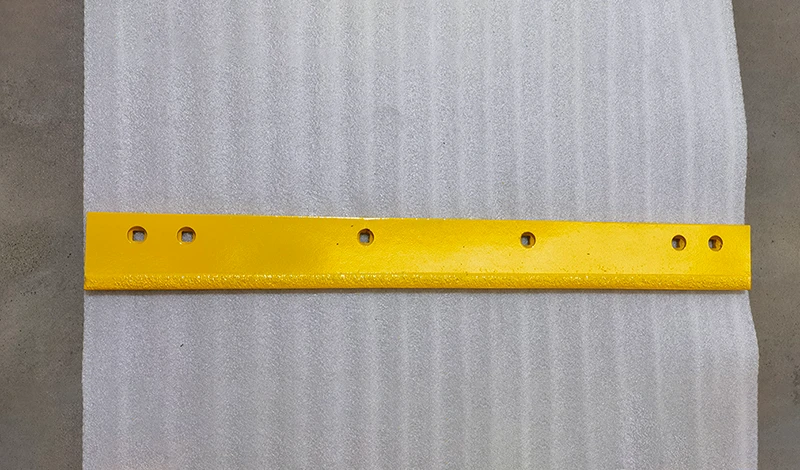
For a carbide blade enquiry, include the route map, the two service outcomes and the approved machine configuration. The next step may be a bounded comparison of permitted options, not an immediate material change. A useful purchase specification explains where the edge will be used and what cannot be sacrificed on either surface. It should not leave the installer to invent a compromise setting at the point where the pavement ends.
Primary references support the specific points linked above; equipment documentation applies to its stated models.


