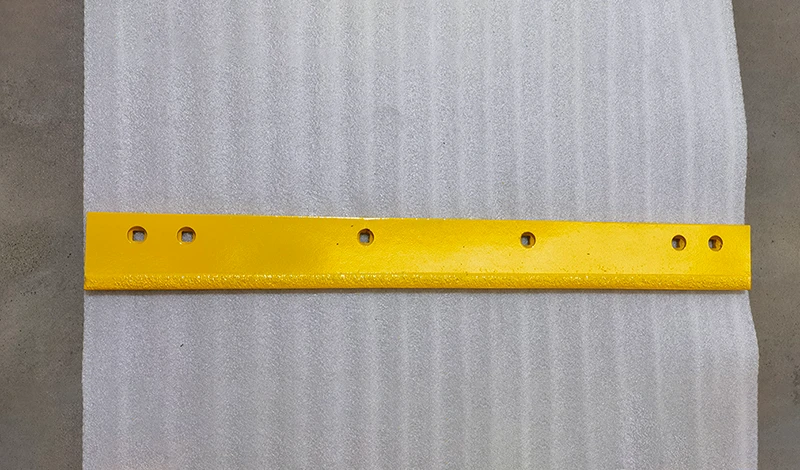
No. Visible sharpness is only part of the geometry and does not establish system-level scraping performance. Compare the intended designs under an approved, well-described bonded-layer task rather than ranking them by appearance.
Separate visible geometry from system-level scraping performance
Identify each candidate by drawing and intended application. Ask what feature the supplier means by sharpness and whether it is a controlled design characteristic or merely a visual impression. Do not handle a working edge to judge sharpness or grind a candidate to make the comparison more dramatic. The supplied approved geometry is what should be assessed.
The packed-ice and standard-edge guide gives broader diagnostic context. This question is specifically about using new-part appearance as a selection shortcut. The buyer needs evidence of the required removal outcome, not a sharper-looking photograph. A favourable result on loose snow would not establish the same conclusion for a bonded layer.
Record edge design, bonded-layer condition and approved operating context
Describe the layer and underlying surface through the route team’s approved assessment. Include relevant weather, pavement and treatment context without guessing bond strength from a photograph. FHWA’s historical guidance distinguishes operating conditions in winter maintenance; its archived prescriptions are not a basis for changing current agency practice.
Confirm each candidate’s complete machine configuration and permitted use before comparison. Ask suppliers to explain the evidence behind any scraping claim and the conditions under which it was obtained. An unsupported assertion that sharper means better should not override fitment, surface restrictions or the approved operating envelope.
Ask for controlled comparison evidence instead of a sharper-is-better claim
Agree a useful comparison outcome: the required residual condition, observations at defined locations and any equipment or surface concerns that stop the evaluation. Keep other material changes visible so the result is not attributed to a tip profile when the whole assembly differs. Record inconclusive conditions rather than choosing a winner from the most attractive new edge.
For a carbide blade enquiry, request the drawing and application evidence together. A controlled local comparison may be appropriate if authorized, but do not create an aggressive scraping trial or alter settings to test a visual theory. The decision should explain which approved design met the defined task and what remains uncertain. New-edge sharpness can prompt a question about design intent; it is not a performance certificate or a reason to modify an installed blade.
Primary references support the specific points linked above; equipment documentation applies to its stated models.
FHWA Manual of Practice for an Effective Anti-Icing Program, recommended practices ↗


