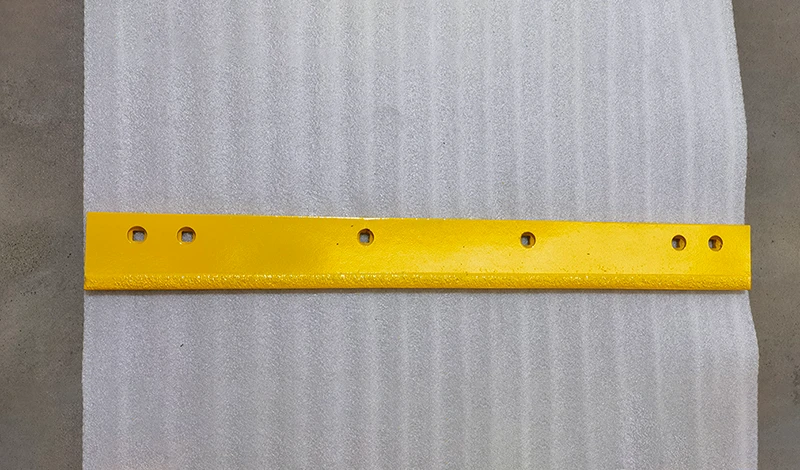
Not automatically. Compare each position’s actual task, exposure and approved mounting options. Shared reporting and purchasing can be useful without forcing the front and wing to use an identical specification.
Record each position's actual contact time and task
Describe when the wing is deployed, which surfaces it serves and the required finish. Keep its contact exposure separate from total truck distance or shift hours. A wing that is carried for much of the route has not necessarily accumulated the same service exposure as the front edge, even when both were installed on the same date.
The front, underbody and wing position guide covers the larger position comparison. This enquiry concerns whether intermittent use justifies copying a front-edge specification. Identify the actual removal reason and operational importance of each position rather than assuming that lower use automatically makes a less demanding requirement.
Compare its mounting design and approved material choices independently
Check each mounting arrangement and approved material or accessory choices using the relevant equipment documents. The wing may have different geometry, handedness or companion interfaces that need their own drawing review. Do not treat the same material label as proof that the parts are interchangeable or that one configuration’s instructions apply to both positions.
Ask the supplier to respond separately to the front and wing tasks. A shared material may be reasonable if supported, but the proposal should explain the basis for each position. Keep any differences in route hazards, surface contact and service constraints visible. The buyer should not trade away an important wing requirement merely to reduce the number of inventory descriptions.
Use a shared reporting system without forcing identical specifications
Use a common reporting format with separate position identifiers. Record installation, relevant service exposure, condition and reason for removal for each edge. Compare like positions when evaluating candidates, and avoid calculating a material advantage from the wing’s longer calendar life alone. Periods out of contact belong in the interpretation, not hidden in the denominator.
For a carbide blade enquiry, provide both position-specific descriptions and ask which specifications can genuinely be shared. If separate variants are needed, keep them distinguishable in stores and on the order. The final decision can simplify supply where evidence permits while preserving the required differences. One fleet report and one purchasing relationship do not require one universal edge specification for every working position.
Primary references support the specific points linked above; equipment documentation applies to its stated models.


