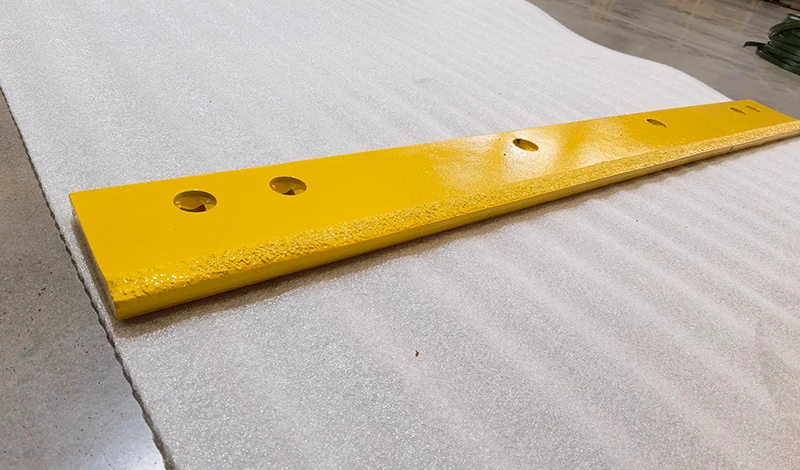
Send a clearly labelled identification pack with service history, assembly photographs and safely established interface dimensions. Keep the model unresolved until an authoritative identification is available; do not turn a visual resemblance into a compatibility claim.
Gather historical service records and labelled assembly photographs
Start with existing fleet records: purchase documents, service invoices, earlier part references and any photographs taken before the plate became unreadable. Preserve partial markings exactly as observed. A plausible completion of a damaged serial or model number can send the investigation toward the wrong equipment, so distinguish readable characters from guesses.
Add an overview of the attachment and labelled photographs of the mounting assembly, edge layout and distinctive companion components. The equipment compatibility guide provides the broader context. Here the aim is to help an authorized support contact identify the machine, not to select a model from appearance and then search only for evidence that confirms it.
Record measurable interfaces but flag model and serial identity as unresolved
Record accessible mounting interfaces with their reference points and units. These observations can help narrow the enquiry and expose differences between candidate models. They should remain measurements of the current assembly, especially if its repair history is unknown. Do not present them as recovered original-design dimensions.
Use the manufacturer support and identification route or the corresponding authority for the suspected equipment. Ask what additional evidence is needed, including whether an in-person assessment is appropriate. The support route is a way to resolve identity; it does not remotely certify a third-party blade. Avoid sharing an unverified model label with suppliers as though it were settled.
Seek dealer or manufacturer identification before making a compatibility claim
A preliminary quotation can describe the evidence available and list the unresolved fitment basis. Request a conditional proposal rather than a promise of compatibility. If the supplier offers manufacture to an approved custom drawing, that still requires a responsible review of the actual mounting interface and equipment suitability; it is not a shortcut around identification uncertainty.
For a carbide blade enquiry, attach the identification pack and state which references are historical, measured or unconfirmed. Once the machine is identified, update the pack and reconcile the proposed drawing against the correct configuration. If identification cannot be established, retain the limitation and seek an authorized engineering route. The useful result is an honest, reviewable enquiry that can progress without manufacturing confidence from a missing plate.
Primary references support the specific points linked above; equipment documentation applies to its stated models.


