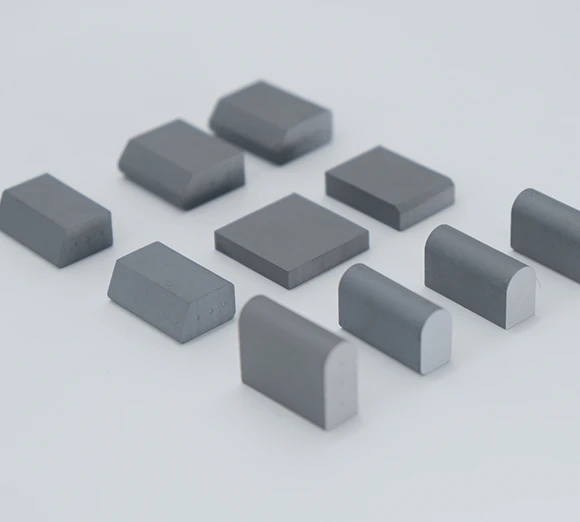
Treat matching hardness as one comparison point, not a declaration of grade equivalence. Compare the controlled material descriptions, relevant properties, test methods and production-lot evidence, then obtain the responsible engineer's substitution decision. The same displayed number does not establish equal suitability in the finished blade.
Compare composition, grain description and relevant property evidence
Ask for the exact grade designation and specification behind each offer, including binder and grain description where controlled. Identify whether the published hardness is a nominal value, a typical range or an acceptance requirement. A catalogue summary and a lot result answer different questions, even when their numbers look alike.
CERATIZIT's cemented-carbide reference identifies binder content and grain size as material-property variables. That supports asking for more than a hardness match; it does not establish a substitution rule between unnamed grades. Do not infer missing composition or microstructure from the hardness value, or assume the same grade name has the same meaning across suppliers.
Use the grade cross-reference guide as broader background. This decision is specifically about the additional evidence needed after hardness appears to match, rather than building a universal conversion chart between suppliers' grade names.
Check test methods and lot applicability rather than isolated catalog values
Put the property reports on a common interpretive basis. Check method and edition, units, specimen form, supplied condition and whether values are measured or typical. If a toughness or strength claim is offered, ask what defined property it represents and how it was obtained. Avoid arranging unlike results into a ranking simply because both are labelled “strength.”
Link production evidence to the proposed material and the lot being supplied. A historical report for a broadly similar grade may explain a supplier's capability without demonstrating this lot's conformance. Identify the limits of any evidence offered before asking whether additional testing is necessary. Do not prescribe extra tests that the engineer has not found relevant to the substitution question.
Keep dimensional and joining requirements visible as separate requirements. A candidate material's acceptable property report would not automatically confirm its supplied surface condition, fit or compatibility with the existing assembly process. The review should identify which of those matters actually changes with the proposed substitution.
Have the responsible engineer approve substitution with application evidence
Give the engineer a concise differences record: unchanged requirements, changed material features, comparable evidence, unresolved points and intended application. Ask for a decision tied to the specified duty and assembly, rather than a general statement that one grade is “equivalent.” Historical Clear Roads research is useful specification background, but it does not approve a substitution or establish universal modern limits.
Where application evidence is needed, agree what would make it relevant and what decision it will support. Do not borrow successful performance from a different product or route as a guarantee. A restricted trial approval and full production approval should remain distinct, with their conditions and affected quantities recorded.
When requesting carbide inserts, preserve the accepted material identity in the order and drawing record. If substitution is approved, state whether it replaces the original grade or is an allowed alternative. That prevents a one-time decision from quietly expanding into permission to use any material that happens to share the same hardness.
Sources and further reading. The ordered specification and applicable equipment documentation control acceptance and service decisions.
CERATIZIT Cemented Carbide ↗Clear Roads 17-02: Standard Specifications for Plow Blades with Carbide Inserts (historical research; not a universal specification) ↗


