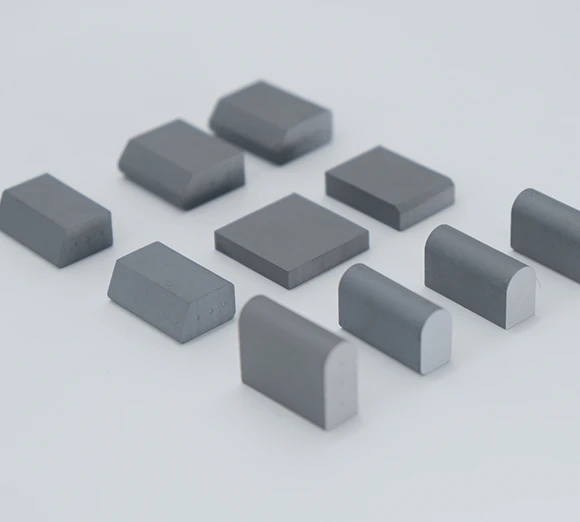
Treat it as a candidate requiring application review, not an established substitute. Compare the grade, geometry, supplied condition and joining requirements with the plow insert's actual duty. Performance claims from machining do not qualify a different assembled wear part or establish its expected life on a winter route.
Separate similar material labels from application requirements
Ask for the exact material specification behind the proposed machining grade and the controlled requirement for the existing plow insert. Identify where they match, differ or lack comparable information. A familiar carbide family name is useful context, but it does not replace the detailed grade identity or the evidence supporting the proposed substitution.
CERATIZIT's cemented-carbide overview shows that material combinations serve varied applications. That breadth supports an application-specific review; it does not make grades interchangeable across those applications. Avoid borrowing tool-life claims, machining parameters or a cutting-tool manufacturer's grade ranking as a snowplow acceptance criterion.
The plow-insert grade and geometry guide addresses broad selection. This discussion concerns the transfer of a material from another duty and the specific evidence needed before accepting that transfer into an established blade design.
Compare impact, abrasion, geometry and joining demands through specialist review
Describe the intended route and assembly requirements to the responsible engineer. Include the relevant wear, impact and inspection concerns without inventing a universal severity ranking between machining and plowing. The useful comparison is between defined requirements, not a claim that one application is always harder on carbide than the other.
Review the proposed insert geometry and how it will be supported and joined. A grade supplied as a finished machining insert may have a different profile or surface condition from the required plow component. Separate material approval from dimensional and assembly approval. The reviewer should identify which differences need further evidence and which are already controlled by the proposed drawing.
Ask whether the submitted property data use suitable methods and specimens and whether they are typical values or acceptance results. The existence of a long-running product line demonstrates something about that product; it does not automatically establish conformance of a newly shaped insert made for another assembly.
Require application qualification rather than borrowing machining performance claims
Agree the qualification question before requesting samples or a trial. Define what laboratory, assembly or application evidence would support the proposed use, and keep operations within the equipment's approved limits. Do not assume a successful fit check establishes route performance, or that one acceptable field observation proves an unrestricted material equivalence.
Use the ordered specification and applicable current methods for acceptance. Clear Roads' historical research can help structure questions about plow insert requirements, but it is not a modern universal grade recipe. The responsible engineer should approve any alternative with its scope and evidence, including limitations or additional inspection where appropriate.
When enquiring about carbide inserts, describe the candidate as proposed for review until that decision is made. Record whether approval covers a trial quantity, a specific assembly or routine production. This preserves a legitimate opportunity to evaluate a material without presenting an unrelated machining reputation as proof that the snowplow application has already been qualified.
Sources and further reading. The ordered specification and applicable equipment documentation control acceptance and service decisions.
CERATIZIT Cemented Carbide ↗Clear Roads 17-02: Standard Specifications for Plow Blades with Carbide Inserts (historical research; not a universal specification) ↗


