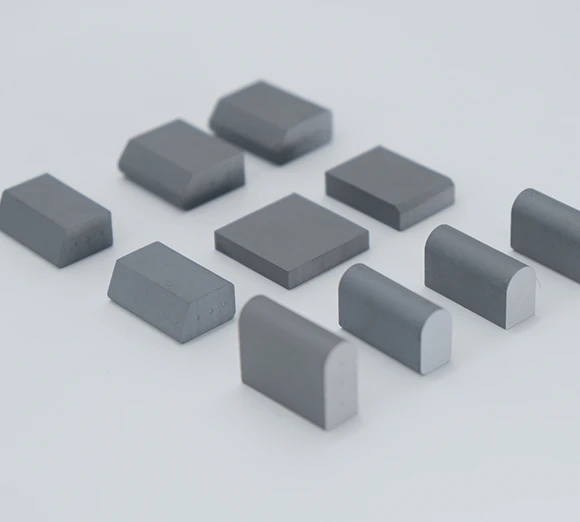
Give each variant a unique identity, document its profile and obtain design review of the relevant interfaces and working edges. Approve one controlled drawing or an explicitly defined alternative set. Keep unapproved samples distinct so a verbal preference or a mixed sample tray does not become an ambiguous manufacturing instruction.
Photograph and dimension each variant with a unique sample reference
Label each variant before measuring or circulating it. Photograph the complete insert and the chamfered feature with a consistent orientation. Identify supplier, sample date and any known drawing revision, but do not infer a revision from appearance. If several pieces share a label despite different profiles, record that discrepancy and ask the issuer to clarify it.
Have the inspector use the agreed method to describe the chamfer feature and its relationship to the adjacent faces. A photograph can show a difference without defining its size or angle accurately. Keep measured values separate from visual estimates, and retain the original sample identities throughout the review.
The insert-tolerance guide covers the broader dimensional package. This question is about selecting and controlling a particular profile variant, not deciding that every sample matching the main length and width is interchangeable.
Ask the design authority to assess joining, handling and working-profile implications
Give the designer the mating geometry, joining-face identification and intended orientation. Ask which differences affect assembly, handling or the working profile, and which are acceptable within the intended requirement. The decision should reflect the feature's role rather than a preference for the sample that looks most polished or robust.
CERATIZIT's joining guidance is relevant when a chamfer affects an interface under process review, but it does not provide the correct chamfer for this part. Do not grind the samples toward a compromise profile or adjust the joining arrangement without authorization. Such changes would create a new variant whose identity and approval basis need to be recorded.
If the drawing is incomplete, ask the design authority to define the missing feature and inspection basis. Historical Clear Roads research can frame geometry as a specification subject, but its example shapes are not a default acceptance rule for these samples. The buyer should not choose a numerical allowance by borrowing it from unrelated inserts.
Freeze the selected profile on the drawing and keep the rejected variants distinct
Record the accepted variant's dimensions and requirements on the controlled drawing or referenced profile specification. Identify the approval sample and state what it represents. If more than one variant is permitted, define that allowance explicitly, including any assembly or use restrictions. Do not leave the decision as “either sample is fine” without a reproducible requirement.
Mark rejected, superseded and exploratory samples so they cannot be sent later as production masters. Preserve their review history where useful, but keep them outside the approved reference set. The supplier's acknowledgement should name the drawing revision and sample identity it will manufacture, allowing receiving inspection to use the same basis.
For carbide insert production orders, carry the approved profile and inspection requirement into the order rather than relying on an email photograph alone. Close the sample decision with an effective revision and clear disposition of the alternatives. That prevents a future repeat order from reintroducing the very chamfer ambiguity the sample review was meant to resolve.
Sources and further reading. The ordered specification and applicable equipment documentation control acceptance and service decisions.
CERATIZIT Joining Techniques ↗Clear Roads 17-02: Standard Specifications for Plow Blades with Carbide Inserts (historical research; not a universal specification) ↗


